
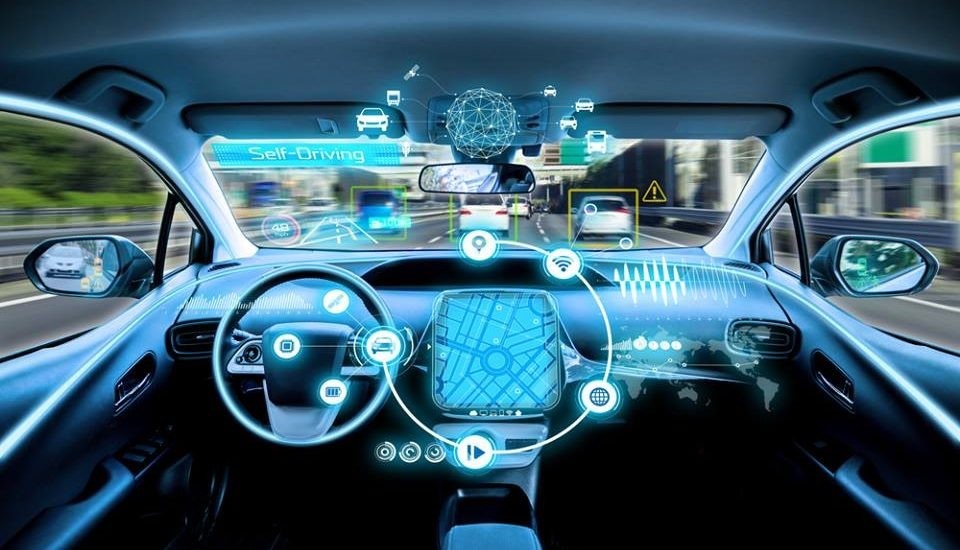

For nearly a century, the basic premise of owning a car remained largely unchanged. You walked into a dealership, negotiated a price, signed physical paperwork, and drove home a mechanical machine. Maintenance was reactive, relying on mileage stickers and strange sounds coming from under the hood. Keys lived in your pocket, and the vehicle value depreciated steadily without ever improving after it left the factory lot.
Today, that analog model is entirely obsolete. The modern automobile has evolved into a rolling data center, an extension of our digital lives defined more by lines of software code than by the pistons in the engine. Digital technology is fundamentally disrupting how we purchase, maintain, protect, and experience our vehicles. This shift is turning car ownership from a static, mechanical burden into a dynamic, connected service.
The Shift From Mechanical to Software-Defined Vehicles
The core driver of this transformation is the rise of the software-defined vehicle. In the past, hardware dictated what a car could do for its entire lifespan. If you wanted a better infotainment system or an advanced safety feature, you had to wait until you bought a newer model year.
Digital technology has separated vehicle capability from physical hardware. Modern cars feature advanced computing architectures capable of processing vast amounts of data in real time. This means automakers can continuously alter how a car performs, tracks information, and interacts with the driver long after delivery.
The most notable manifestation of this shift is the deployment of over-the-air software updates. Much like a smartphone receives operating system updates, a connected vehicle now downloads performance enhancements, safety patches, and new features while parked in a garage. These updates can optimize battery efficiency in electric models, adjust braking parameters, or add entirely new navigation interfaces, ensuring that the vehicle stays current instead of slowly degrading in technological value.
Transforming the Dealership and Purchase Experience
The traditional dealership model has long been a source of friction for consumers, defined by hours of negotiations, opaque financing structures, and physical paperwork. Digital platforms are completely restructuring this pipeline, shifting control back to the buyer.
Online configurations and direct-to-consumer digital sales models allow buyers to browse inventory, customize features, calculate trade-in values, and secure financing entirely online. Virtual reality test drives and high-definition online showrooms provide comprehensive lookups of vehicle interiors and design choices without requiring a visit to a physical lot.
Furthermore, digital contract signing and remote home delivery services mean that physical interactions are now completely optional. When a dealership transaction does occur, it is increasingly backed by transparent data algorithms that clearly state market pricing, eliminating the adversarial dynamic that once characterized the automotive buying process.
Predictive Maintenance and Remote Diagnostics
Historically, automotive maintenance was built on guesswork and strict intervals. Drivers relied on dashboard warning lights that only illuminated after a failure had already occurred, leading to costly unexpected repairs and sudden breakdowns.
Digital telematics systems have replaced this reactive approach with predictive maintenance. Modern vehicles continuously monitor thousands of internal data points, tracking heat levels, vibration patterns, fluid degradation, and electrical currents.
-
Early Failure Warnings: Algorithms can identify when a component is beginning to wear down weeks before it actually fails.
-
Proactive Scheduling: The vehicle can automatically send a diagnostic report to a service technician and prompt the driver to schedule an appointment via an app.
-
Over-the-Air Fixes: In many instances, software bugs or calibration errors can be diagnosed and repaired remotely by the manufacturer without requiring a trip to a physical garage.
This minimizes vehicle downtime, prevents cascading mechanical damage, and provides clear insight into the exact health of the automobile.
Smartphone Integration and Digital Keys
The physical car key is rapidly becoming a relic of the past, replaced by smartphones and secure wireless protocols. Digital keys leverage ultra-wideband technology and near-field communication to pair a driver’s phone securely with their vehicle.
This integration enables a high degree of personalization and remote management through dedicated mobile applications. Owners can check fuel or battery levels, locate their vehicle in a crowded lot, and pre-condition the cabin temperature prior to entry.
Moreover, digital keys revolutionize how vehicles are shared. An owner can instantly transfer access to a family member, friend, or valet attendant via a text message or secure app link. These digital credentials can be customized with strict parameters, such as restricting maximum speeds for teenage drivers or setting an exact expiration time after which the digital key automatically deactivates.
Usage-Based Insurance and Telematics
The financial landscape of car ownership is also shifting due to data collection. Traditionally, auto insurance premiums were calculated using broad demographic groups, looking at generalized risk factors like age, zip code, gender, and credit scores. This model often penalized safe drivers who happened to fall into statistically higher-risk categories.
Telematics technology enables usage-based insurance programs that price policies based on real-world driving habits. By analyzing built-in vehicle data or mobile app sensors, insurance providers can assess actual risk behavior.
-
Monitored Metrics: Systems track exact braking intensity, cornering speeds, acceleration rates, total mileage, and the times of day the vehicle is on the road.
-
Customized Premiums: Drivers who demonstrate defensive driving habits and maintain lower overall mileage receive direct discounts on their monthly premiums.
-
Immediate Feedback: Many platforms provide driving scores and actionable feedback within an app, incentivizing safer behavior on public roadways.
This shift rewards responsible drivers with significant cost savings while giving insurers an accurate, data-backed method for assessing liability.
The Rise of the Subscription Economy
As software becomes central to the automotive experience, manufacturers are adopting business models popularized by tech companies. Features that once required premium upfront packages are now being offered through flexible software subscriptions.
This model allows owners to activate specialized hardware capabilities on a temporary or permanent basis depending on their current needs. For instance, a driver might pay a monthly fee to unlock advanced driver-assistance features during a long road trip, or subscribe to heated seating options specifically during the winter months.
While this trend has sparked debate regarding consumer rights and upfront manufacturing costs, it provides an unprecedented level of flexibility. Owners no longer need to commit to expensive options at the moment of purchase; instead, they can scale their vehicle capabilities up or down as their lifestyle or budget dictates.
Enhanced Security and Fleet Management
Vehicle security has progressed far beyond simple car alarms that sound when a door is forced open. Connected vehicle ecosystems offer active, multi-layered security frameworks that make theft exceptionally difficult and recovery highly efficient.
GPS tracking systems provide continuous location updates directly to an owner’s smartphone, allowing for real-time monitoring. If a vehicle is stolen, digital systems allow law enforcement to track the vehicle precisely, and some manufacturers can even send a remote command to immobilize the engine once the car comes to a safe stop.
Furthermore, built-in camera networks, which originally served to assist with parking and autonomous driving, now function as continuous surveillance systems. When the car is parked, these cameras record ambient motion and physical impacts, sending immediate video clips and alerts to the owner if vandalism or a hit-and-run collision occurs.
Frequently Asked Questions
What happens to digital car features if the manufacturer goes out of business?
If an automotive manufacturer closes or discontinues support for a specific model line, the cloud infrastructure powering connected services will eventually shut down. While the physical, mechanical aspects of the car will continue to function normally, remote app controls, real-time navigation updates, and over-the-air software adjustments will cease to operate unless a third-party developer steps in to maintain the server communication channels.
Do connected digital features work in areas without cellular coverage?
Basic vehicle functions, offline safety systems, and pre-installed software features will continue to operate normally without an active cellular signal. However, real-time capabilities such as remote app start, live traffic mapping, over-the-air updates, and instant emergency alerts require cellular data or local Wi-Fi connections to transmit data back to corporate or cloud servers.
Can a hacker take control of a software-defined car while it is being driven?
While any internet-connected system carries a degree of cyber risk, modern automotive engineering utilizes strict electronic segmentation. The entertainment systems and cellular communication units are physically and digitally isolated from the critical electronic control units that govern steering, throttle, and braking. Manufacturers use advanced encryption and constant security audits to prevent external commands from interfering with driving dynamics.
How do digital keys function if my smartphone battery dies completely?
Most modern digital key ecosystems utilize passive near-field communication technology alongside active wireless signals. This allows the digital key backup profile to function even when the smartphone lacks enough battery power to boot up the operating system. By tapping the physical phone against a designated spot on the door handle, the car can read the secure credential and grant entry and starting permissions.
Will opting into usage-based insurance cause my premiums to go up if I have one bad driving day?
Usage-based insurance algorithms look at long-term driving trends over weeks or months rather than isolating a single sudden stop or rapid acceleration event. A single defensive driving maneuver made to avoid an accident will not ruin your insurance score. Premiums adjust based on consistent, repeated patterns of aggressive driving or exceptionally high mileage.
Do over-the-air software updates consume data from my personal cellular plan?
No, critical automotive software updates and manufacturer safety patches do not count against your personal mobile data allocation. Vehicle manufacturers embed dedicated cellular modems with independent data contracts directly into the hardware to handle these administrative transmissions, though some updates may require you to connect the vehicle to a home Wi-Fi network if the file size is unusually large.
Can I opt out of data sharing and still use a highly digitized vehicle?
Automakers provide privacy settings that allow owners to opt out of non-essential data collection, such as sharing driving data with third-party marketers or insurance aggregators. However, completely disabling all data transmissions often means turning off useful features like live navigation, remote roadside assistance, smartphone app integration, and over-the-air software updates, reducing the car to its basic mechanical functionalities.
Comments are closed.