
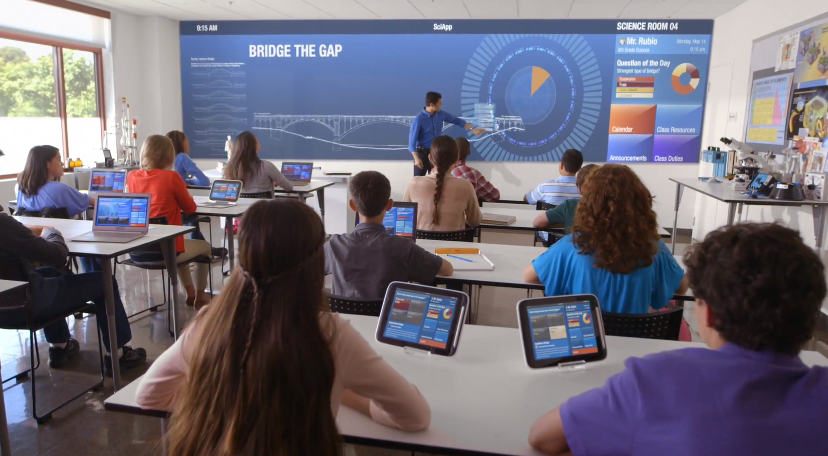

For generations, formal education systems functioned as engines of standardization. Developed during the height of the Industrial Revolution, the traditional classroom model prioritized rote memorization, uniform testing, and strict compliance. The primary objective was to produce a workforce capable of performing repetitive tasks with high precision. In that environment, obedience and memorization were the ultimate benchmarks of student success, while divergent thinking was frequently discouraged as a disruption to the curriculum.
The contemporary global economy has rendered this compliance-based model entirely obsolete. With the rapid integration of artificial intelligence, advanced robotics, and ubiquitous digital automation, the mechanical processing of information is no longer a human competitive advantage. Computers can recall facts, parse data, and execute algorithmic formulas infinitely faster and more accurately than any human mind. Consequently, the true value of modern human capital lies in what machines cannot easily replicate: the ability to think critically, synthesize disparate ideas, solve ambiguous problems, and innovate.
To prepare students for this dynamic future, academic paradigms are forced to undergo a profound structural shift. Creativity is no longer viewed as an optional extracurricular activity or an inherent artistic talent reserved for a select few. Instead, cognitive scientists and progressive educators recognize creativity as a core intellectual competency that must be deliberately integrated into every aspect of the modern learning ecosystem.
Redefining Creativity in an Academic Context
To understand the role of creative thinking in contemporary schools, one must first dismantle the prevailing myth that creativity is exclusively linked to the fine arts. For decades, the public conflated being creative with an aptitude for painting, playing an instrument, or writing fiction. While these artistic expressions are vital, they represent only a specific subset of a much broader cognitive framework.
In the realm of modern educational psychology, creativity is defined as the cognitive process of generating ideas, solutions, or products that are both original and useful. It is the capacity to approach a problem from multiple angles, identify hidden patterns, challenge underlying assumptions, and construct novel pathways forward. This form of thinking is just as critical in a chemistry laboratory, a computer science coding bootcamp, or an advanced economics seminar as it is in an art studio.
Educational theorists break this cognitive capacity down into two complementary thinking patterns: divergent thinking and convergent thinking. Divergent thinking involves expanding the mind outward to generate a wide array of potential ideas or answers without initial judgment. Convergent thinking involves narrowing those possibilities down, applying logic and critical analysis to select and refine the most viable solution. True creative competence requires a fluid orchestration of both processes. By reframing creativity as an accessible, structured cognitive skill, schools can actively teach and evaluate it across all academic disciplines.
The Industrial Backlash and the Over-Testing Crisis
The primary obstacle to embedding creative practices in modern schools remains the deep-seated legacy of high-stakes standardized testing. Throughout the late twentieth and early twenty-first centuries, educational policy in many Western nations became hyper-focused on quantifiable metrics. Funding, school rankings, and teacher evaluations became directly tied to student performance on uniform, multiple-choice examinations.
This over-testing crisis created a highly defensive teaching environment. When a school district faces financial penalties based on test scores, educators are systematically incentivized to teach to the test. This pedagogical approach compresses the curriculum into a rigid set of predictable answers. Students are trained to find the single correct choice out of four options, entirely eliminating the nuance, ambiguity, and experimentation that define real-world problem-solving.
The cognitive cost of this dynamic is severe. Research tracking longitudinal creativity scores has revealed a steady decline in creative thinking among young students over recent decades, a trend that directly correlates with the expansion of high-stakes testing regimes. By penalizing mistakes and rewarding safe, conformist answers, traditional testing models inadvertently cultivate a deep fear of failure. This risk aversion paralyzes a student’s creative faculties, leaving them ill-equipped for a modern professional landscape that values disruption and adaptive experimentation.
Project-Based Learning and Interdisciplinary Synthesis
To counteract the limitations of standardized instruction, progressive institutions are increasingly turning to project-based learning and interdisciplinary curricula. Rather than isolating subjects into artificial silos—where math, history, and science are taught in complete fragmentation—project-based frameworks require students to apply diverse academic skills to solve complex, real-world challenges.
When students engage with an open-ended project, the nature of the learning process changes. They are no longer passive consumers of pre-digested information; instead, they become active investigators, designers, and creators. For example, instead of merely memorizing the cellular structure of a plant from a textbook, an interdisciplinary project might challenge students to design a sustainable urban farming system for their local community.
-
Scientific Research: Students must analyze biology, botany, and soil chemistry to determine optimal growing conditions.
-
Mathematical Application: They must apply geometry and algebraic modeling to maximize spatial efficiency and calculate water-to-crop ratios.
-
Sociological and Rhetorical Design: They must study civic demographics and craft persuasive public proposals to present their ideas to local municipal leaders.
This pedagogical structure forces students to synthesize knowledge from entirely different domains. It mirrors the actual structure of modern industry, where breakthroughs rarely occur within a vacuum but rather at the intersection of completely different fields of study.
Fostering Psychological Safety and Content Iteration
Creativity cannot emerge in an environment dictated by anxiety and punitive judgment. By definition, the creative process requires a willingness to venture into the unknown, test unproven theories, and encounter initial failures. If a student believes that an incorrect hypothesis or a flawed prototype will result in permanent academic damage, they will invariably choose the safest, most conventional path.
Therefore, modern educators must prioritize the creation of psychological safety within the classroom. This requires a fundamental shift in how mistakes are contextualized. Rather than viewing a wrong answer as a definitive terminal failure, progressive pedagogy frames error as an essential source of diagnostic data.
This approach is highly visible in the integration of design thinking frameworks into elementary and secondary education. Borrowed from software engineering and industrial design, design thinking structures learning as an iterative cycle: empathize, define, ideate, prototype, and test. In this framework, the first prototype is expected to fail. The value lies in analyzing why it failed, gathering feedback, and rapidly iterating a second, improved version. When the grading structure rewards resilience, iteration, and calculated risk-taking alongside the final output, students develop the growth mindset necessary to navigate complex intellectual challenges throughout their lives.
Technology as an Enabler, Not a Replacement
The relationship between digital technology and student creativity is highly complex. When used passively, technology can easily become an instrument of intellectual compliance, directing students through automated, linear drills and screen-based consumption that limits independent thought. However, when deployed intentionally, modern technological tools serve as powerful catalysts for creative expression.
Digital fabrication labs, three-dimensional printing systems, and accessible software development platforms allow students to transform abstract concepts into physical realities with unprecedented speed. A history student can design and print a physical scale model of an ancient architectural site. A music student can utilize digital audio workstations to compose and arrange intricate orchestral scores without needing access to expensive physical instruments. A language arts student can write, direct, edit, and digitally distribute an documentary film addressing local social issues.
Furthermore, the rise of advanced generative computing tools provides students with an automated brainstorming partner. Instead of replacing human thought, these platforms can be used to generate initial ideas, simulate opposing arguments, or provide immediate, variable code pathways for a student-led software project. By offloading routine procedural elements to digital systems, students are liberated to focus their cognitive energy on higher-order conceptual design, critical synthesis, and strategic innovation.
Frequently Asked Questions
How can teachers objectively grade and assess creativity without being subjective?
Educators assess creativity by utilizing highly structured, criteria-based rubrics rather than relying on personal preference or aesthetic taste. These rubrics evaluate specific, measurable dimensions of the creative process, such as fluency (the quantity of ideas generated), flexibility (the variety of different categories or angles explored), originality (the statistical uniqueness of the solution), and elaboration (the depth of detail and execution in the final product). Furthermore, assessments often separate the grading of technical skill from the evaluation of conceptual risk-taking and iterative development.
Does an explicit focus on creativity diminish the importance of learning basic foundational facts?
Cultivating creativity does not replace the need for foundational knowledge; rather, the two are deeply interdependent. Creative thinking requires a robust framework of domain-specific facts, concepts, and skills to act as the raw material for synthesis. A writer cannot compose an innovative essay without a deep mastery of vocabulary and grammar, just as a scientist cannot engineer a creative solution to carbon capture without a comprehensive understanding of fundamental physics and chemistry equations. Creativity is the advanced manipulation of foundational knowledge, not an alternative to it.
Are some children naturally born creative, or can it be universally taught to anyone?
While genetic variations can influence personality traits such as openness to experience and curiosity, cognitive research demonstrates that creativity is a plastic, trainable skill rather than a fixed genetic trait. Much like physical muscular development, creative neural pathways strengthen through deliberate practice, exposure to diverse stimuli, and consistent engagement with open-ended problem-solving tasks. Anyone can improve their creative capacity when provided with the proper cognitive strategies, environmental safety, and iterative frameworks.
How can public schools with severely limited budgets implement creative learning programs?
Implementing a creative learning curriculum does not require expensive high-tech machinery or specialized makerspaces. The core of creative pedagogy lies in the structure of the assignments, not the cost of the physical materials. Teachers can foster profound creative development by restructuring standard lessons into open-ended inquiries, utilizing found or recycled objects for engineering prototypes, encouraging socratic debates, and replacing standardized worksheets with collaborative problem-solving challenges that utilize basic paper, pencils, and communal discussion.
What specific role do parents play in supporting or hindering a child’s creative growth?
Parents heavily influence a child’s creative development through the psychological atmosphere they maintain at home. Parents hinder creativity when they impose hyper-rigid schedules, over-schedule children with hyper-structured activities, or express intense anxiety regarding immediate perfection and conventional grades. Conversely, parents foster creativity by allowing unstructured time for independent play, encouraging curiosity through open-ended questioning, validating the effort behind a failed attempt, and providing a safe space where experimentation is celebrated over rigid compliance.
How does the prioritization of creativity benefit students who plan to enter non-artistic fields?
In professional environments like data science, structural engineering, corporate law, and surgical medicine, routine technical procedures are increasingly automated. The professionals who excel in these fields are those who possess the creative dexterity to diagnose unprecedented anomalies, design novel system architectures, navigate complex ethical ambiguities, and communicate across highly disparate industries. Creativity is the foundational driver of strategic leadership and technical problem-solving across every high-wage economic sector.
Comments are closed.