
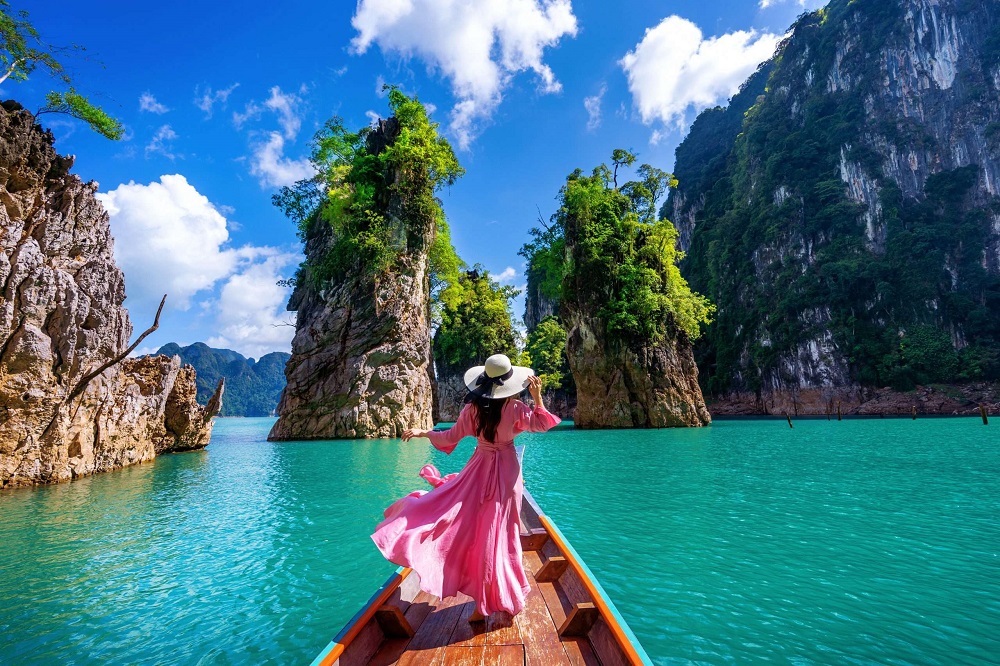

The modern travel landscape has experienced a major shift in consumer intent. For generations, international tourism was primarily defined by leisure consumption, where travelers sought out uniform luxury resorts, pristine beaches, and highly manicured sightseeing corridors designed to maximize comfort and minimize friction. This detached model of exploration is increasingly giving way to a desire for deep cultural immersion.
Today, travelers are looking for destinations that offer genuine engagement with historical traditions, ancestral lifestyles, and alternative worldview frameworks. True luxury is no longer defined by insulation from the local environment, but by the depth of integration into it. Immersive cultural travel challenges personal assumptions, builds global empathy, and preserves intangible human heritage. By stepping off the standardized global tourist tracks, travelers can engage with communities where ancient practices are not static museum exhibits, but living, breathing elements of daily survival and communal identity.
Kyoto, Japan: The Preservation of Living Aesthetic Traditions
While Tokyo showcases the absolute cutting edge of technological acceleration, Kyoto serves as the cultural heart of Japan, preserving a world governed by ancient aesthetic philosophy. Serving as the imperial capital for more than a thousand years, the city function as a sanctuary for traditional arts that have vanished from much of the modernized world.
The uniqueness of Kyoto lies in its commitment to preserving highly specialized, multi-generational crafts. This is visible in the strict preservation of historic neighborhoods like Gion and Higashiyama, where the architectural layouts, wooden buildings, and stone streets remain unchanged from the Edo period.
-
The Choreography of the Tea Ceremony: Known locally as Chado or the Way of Tea, this practice is a deeply spiritual exercise built around Zen philosophy, where every movement, micro-gesture, and material selection is calculated to cultivate mindfulness, respect, and tranquility.
-
Textile Mastery in Nishijin: The historic weaving district continues to produce intricate silk textiles using traditional looms and natural dye techniques that require decades of master apprenticeship to perfect.
-
Maiko and Geisha Artistry: Kyoto remains the primary repository for classical Japanese performance arts, where practitioners undergo rigorous training in traditional instrumentation, classical dance, and formal poetry.
Oaxaca, Mexico: Culinary Heritage and Indigenous Synthesis
Located in a rugged southern valley, Oaxaca represents one of the most resilient indigenous cultural bastions in the Americas. The region is a dense tapestry of Zapotec and Mixtec heritages, synthesised with colonial historical influences to create a distinct regional identity that is entirely separate from northern Mexico.
Oaxaca is recognized globally for its complex culinary ecosystem, which was among the first to be designated as an intangible cultural heritage by global preservation bodies. The local gastronomy relies on ancestral agricultural techniques, such as the milpa crop rotation system, and the preservation of endemic ingredients like heirloom corn varieties, native chiles, and wild agave.
The central nervous system of Oaxacan culture is its network of regional markets, such as Central de Abastos and Tlacolula. These spaces are not mere commercial venues; they are vital civic centers where indigenous languages are spoken natively, and ancient barter systems still function. Visitors encounter a profound living traditions where culinary execution, artisanal pottery, and textile hand-weaving are deeply intertwined with spiritual calendars and community governance frameworks.
The Sacred Valley, Peru: Ancestral Agricultural Science
While the majority of travelers treat the Sacred Valley simply as a transit corridor on their way to the ruins of Machu Picchu, the valley itself holds a rich living culture derived directly from the administrative and spiritual systems of the Incan Empire. The contemporary Quechua-speaking communities inhabiting these high-altitude villages maintain a direct link to ancestral Andean lifeways.
The cultural uniqueness of this region is found in its sophisticated relationship with a challenging mountain environment. Modern residents continue to utilize the massive stone agricultural terraces and complex gravity-fed irrigation canals engineered by their ancestors hundreds of years ago.
-
High-Altitude Textile Alchemy: In villages like Chinchero, women organize weaving collectives that use completely pre-Hispanic techniques, extracting brilliant colors from local minerals, plants, and insects to create complex geometric textiles that communicate tribal history and social status.
-
The Concept of Ayni: The community operates on an ancestral economic system of sacred reciprocity known as Ayni, where labor and resources are shared fluidly among households without the mediation of currency.
-
Preservation of Agro-Biodiversity: Local farmers manage thousands of unique varieties of native potatoes and tubers, adapting ancient ecological knowledge to maintain food security across fluctuating microclimates.
Fez, Morocco: Architectural Antiquity and Islamic Scholarship
Fez possesses the largest and most complete living medieval old city in the world, known as Fez el-Bali. This urban labyrinth, consisting of more than nine thousand winding alleys completely inaccessible to motorized vehicles, operates on a socio-economic structure that has remained intact since the ninth century.
The city is anchored by the University of al-Qarawiyyin, recognized as the oldest continuously operating institution of higher learning on earth. This architectural and intellectual anchor has fostered a culture of meticulous craftsmanship and scholarly preservation that defines the daily life of its residents.
The sensory geography of Fez is strictly organized by historic trade guilds. As you navigate the carless urban maze, you pass through dedicated quarters for copper-smithing, wood-carving, spice-blending, and book-binding. The most iconic of these is the Chouara Tannery, where artisans still stand knee-deep in stone vessels filled with natural fluids, processing leathers using manual methods developed over a millennium ago, completely resistant to industrial automation.
Bhutan: Gross National Happiness and Isolated Spiritualism
Bhutan represents a unique global case study in cultural isolation and state-mandated heritage preservation. Nestled deep within the eastern Himalayas, the kingdom deliberately insulated itself from the outside world for centuries, only permitting managed tourism and modern telecommunications within recent decades.
The country operates under the governance framework of Gross National Happiness, which prioritizes cultural preservation and environmental sustainability over raw gross domestic product metrics. This state policy makes daily life in Bhutan a profound cultural experience for outsiders.
Citizens are required by law to wear traditional national attire in public spaces, preserving centuries-old textile identity. The landscape is dominated by Dzongs—massive, fortress-like monastic complexes that serve as both the administrative and spiritual centers of every district. Because the nation bypasses mass consumerism, travelers interact with a society where Vajrayana Buddhism is not a compartmentalized religious practice, but the core organizing principle governing community law, environmental protection, and daily human relationships.
Frequently Asked Questions
How does the concept of community-based tourism differ from traditional sightseeing?
Community-based tourism ensures that local residents retain full ownership, administrative control, and the financial benefits of the travel economy. Instead of staying in foreign-owned resort chains, travelers reside in locally managed homestays, hire regional guides, and participate in community-sanctioned activities, ensuring that the financial capital generated by tourism directly supports the preservation of local infrastructure and heritage.
Why is it culturally problematic to photograph local residents without explicit permission?
Photographing individuals without consent reduces human beings and living traditions to passive, exoticized consumer commodities. In many indigenous or deeply religious communities, unauthorized photography violates spiritual tenets, disrupts personal privacy, and establishes an unequal power dynamic between the traveler and the host community. Always request permission through a local guide or direct communication before capturing an image.
What strategies can a traveler use to minimize their cultural footprint in sensitive destinations?
Travelers can minimize their cultural footprint by researching local dress codes, social etiquette, and religious prohibitions prior to arrival. Choose local guides who speak the native language, respect sacred spatial boundaries, support independent artisanal workshops over centralized souvenir factories, and avoid treating everyday cultural practices as staged performances.
How do seasonal festivals impact the logistics of cultural travel?
Attending major cultural festivals offers unparalleled insights into living traditions, but it requires advanced logistical planning. During events like Dia de los Muertos in Oaxaca or the Tsechus in Bhutan, regional transportation, lodging, and access permits fill up months in advance. Additionally, local prices often surge, and travelers must exercise heightened sensitivity as public spaces become crowded with both celebrants and tourists.
What is intangible cultural heritage and why does it matter?
Intangible cultural heritage encompasses oral traditions, performing arts, social practices, festive events, rituals, and the specialized knowledge and skills needed to produce traditional crafts. Unlike physical monuments or archaeological ruins, intangible heritage is vulnerable to extinction if younger generations stop practicing or passing down these living traditions, making conscious cultural tourism vital for their economic survival.
Can travelers participate in sacred ceremonies without causing disruption?
Participation depends entirely on the specific guidelines of the host community. Some ceremonies are explicitly open to outsiders as an act of cross-cultural education, provided travelers maintain quiet decorum and follow structural rules regarding seating and clothing. Other rituals are strictly private and internal; travelers should always rely on a trusted local cultural intermediary to determine whether their presence is appropriate.
How does the preservation of indigenous languages protect local ecosystems?
Indigenous languages contain highly specialized ecological data, including unique classifications for local flora, fauna, and environmental patterns that do not translate into global languages. When an indigenous language is preserved through community continuity, the traditional ecological knowledge regarding sustainable agriculture, natural medicine, and resource conservation remains active, protecting both the culture and the local ecosystem.
Comments are closed.